
Preparing for Interviews
Interviews can feel like a big deal, especially if you have not been through many before or if you grew up without anyone showing you how they work. It is completely normal to feel nervous, unsure, or overwhelmed.
You are stepping into something new. That already shows courage.
Think of this guide as someone sitting beside you, talking it through calmly. You are not expected to know everything. You are learning, and you deserve support that feels steady and kind.

What an interview really is
An interview is not a test or a judgement of your worth.
It is simply a conversation. A chance for the employer to get to know you, and a chance for you to get to know them. It helps both sides work out whether the job and environment feel right.
You are not walking into a spotlight.
You are walking into a conversation.
Before the interview
You do not need to prepare everything at once. Taking things step by step is enough.
Click on the options below for more details:
-
Job descriptions can feel long or overwhelming, especially when they include unfamiliar language.
Rather than trying to understand every line, focus on the main tasks they want you to do and the skills they mention more than once. Notice the parts you already feel confident about, and the areas you would be willing to learn.
You do not need to meet every requirement. Most people do not. Employers are often looking for attitude, reliability, and willingness to grow.
-
You do not need to spend hours researching.
A quick look at the “About Us” page or a glance at their website or social media is enough to understand what they do and what they value. This helps you answer questions more naturally and, just as importantly, helps you decide whether the company feels respectful and right for you.
Interviews go both ways. You are also choosing.
Practical preparation

Use the sections below if you want a bit more structure.
Preparing a few simple examples
Interviewers often ask about real situations because it helps them understand how you think and respond.
Your examples do not have to come from formal work. They can come from school or college, part-time jobs, caring for others, volunteering, helping in your community, or managing difficult situations in your own life.
A simple way to structure an answer is to explain what was happening, what you did, and what the outcome was. Short and honest answers are usually better than long, rehearsed ones.
Preparing notes is allowed (and helpful)
It is completely okay to take notes into an interview.
Writing a few points down helps you remember what you want to say, especially if you feel nervous or your mind goes blank under pressure. Handwritten notes can be particularly helpful, but typed notes are fine too.
Notes are not cheating.
They show preparation, organisation, and care.
Your notes might include key skills you want to mention, short reminders of examples you’ve prepared, or questions you want to ask. They help you stay on track and keep a clear flow.
If you’re worried about how it looks, you can simply say something like:
“I’ve made a few notes to help me give clear and relevant examples.”
That’s all you need. Most interviewers will see this as a positive, not a negative.
You do not need to read from your notes word for word. They are there to support you, not replace you.
We have included an Interview Prep Sheet below. Feel free to save it if you feel it will be useful:
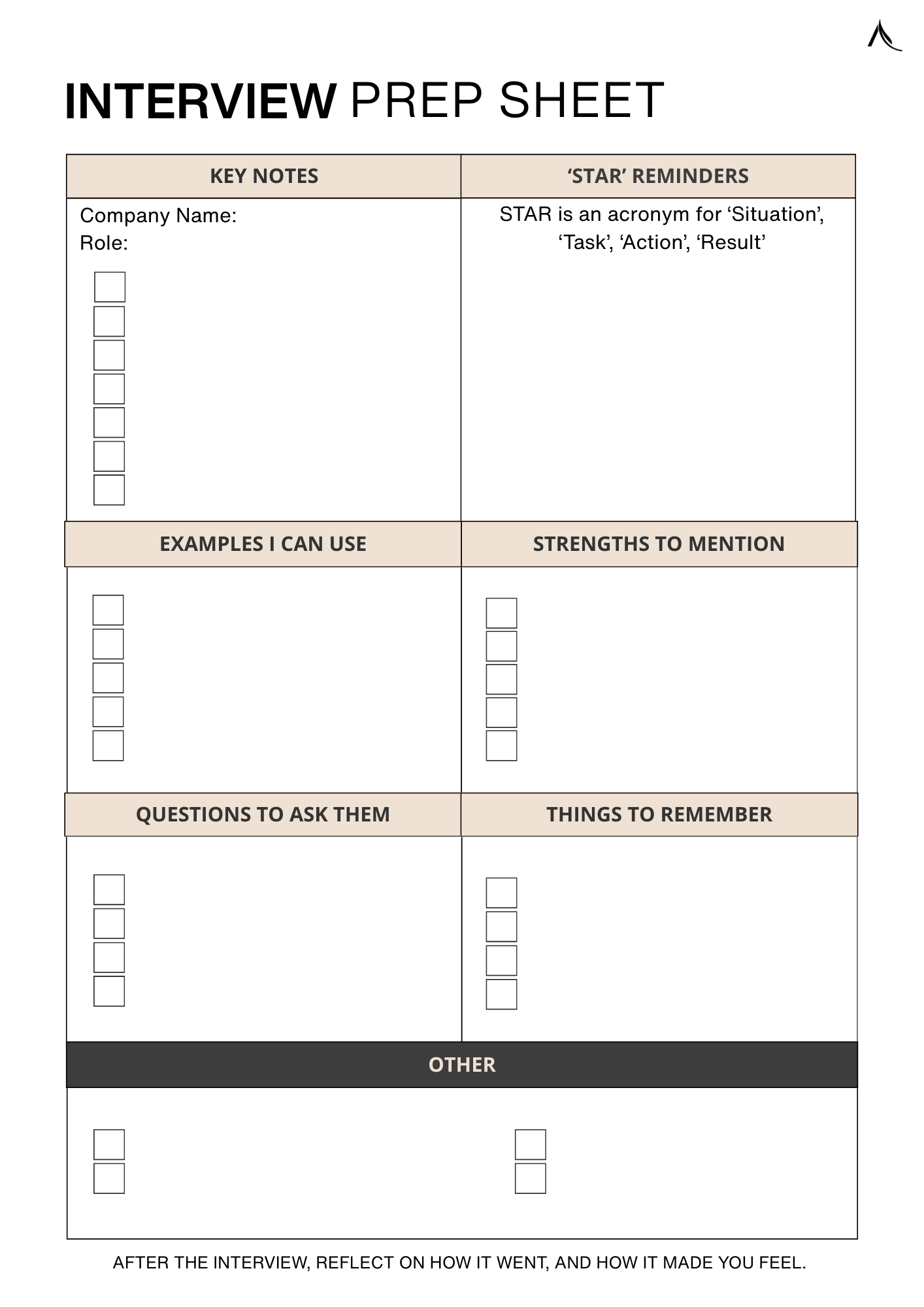
You can save the image above, or download it as a PDF here
Common questions you might hear
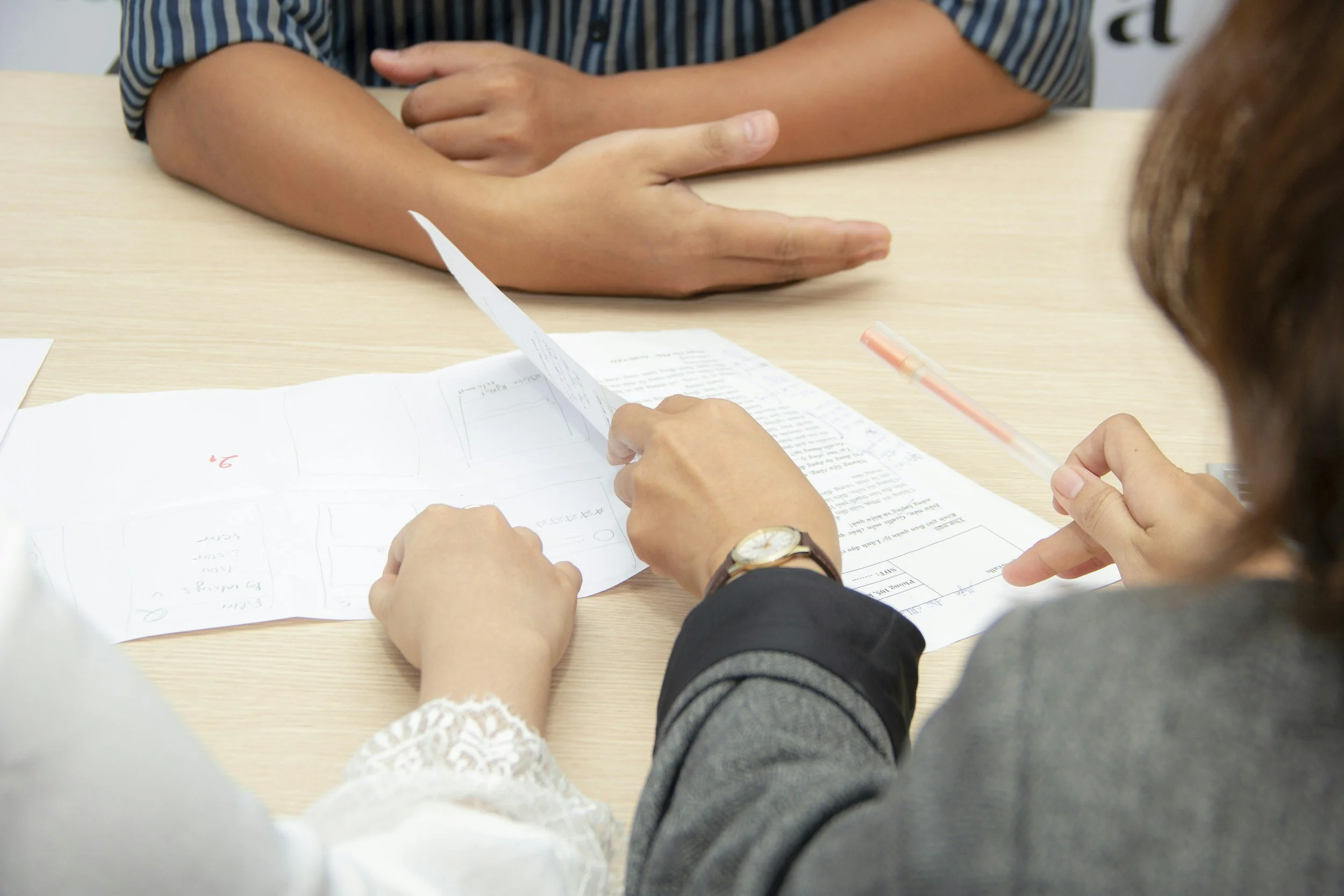
Most interviews include similar questions. You might be asked to talk about yourself, explain why you want the role, describe your strengths, or share an example of solving a problem.
Practising these quietly in your head or out loud can help reduce nerves. You are not trying to sound perfect, just prepared.
Questions you can ask them
Asking questions is expected and shows confidence.
You might want to know what a typical day looks like, what support new starters receive, or what people usually enjoy about working there. These questions help you understand whether the role and environment suit you.
Below is a video on the STAR technique, which is really handy to structure your answers to interview questions:
On the day
Click on each point below for more details to prepare for an interview day:
-
Having a few things ready can help you feel more settled. Your CV, any notes you have made, a drink of water, and a clear plan for getting there are usually enough.
Preparing the night before removes a lot of last-minute stress.
-
No one expects designer clothes or a perfect outfit.
Clean, comfortable, smart clothing that feels like you is enough. Your attitude and how you engage matter far more than what you wear.
-
Feeling nervous does not mean you are unprepared. It means you care.
Before you go in, take a few slow breaths, feel your feet on the floor, and remind yourself that you belong in that room.
Arriving a little early can also give you time to settle.
After the interview
Once it is over, take a moment to check in with yourself.
Think about how the environment felt, how the people spoke to you, and whether you felt respected and listened to. You are not just being assessed. You are also deciding whether this is a place where you could grow.
Reflective moment
If interviews bring up anxiety or self-doubt, that is understandable. Many people who grew up without consistent support carry deep feelings around being judged or assessed.
You are not that person anymore.
You walk into interviews with everything you have survived and everything you are becoming. That matters.
Conclusion
Preparing for interviews is about giving yourself steady ground to stand on.
With gentle preparation, a few examples ready, and a calm, honest approach, you can walk into interviews feeling more confident and in control.
You deserve roles that feel right for you and you deserve spaces where you can thrive.