
Your Rights: Financial Support for Care Leavers
Leaving care and stepping into independence is a big milestone. It can feel exciting, overwhelming and full of unknowns. When it comes to money, young people who grew up in care often feel they should “just manage” without much help. Many aren’t told about support that is legally theirs.
You deserve to know exactly what financial support is out there for you.
You deserve clarity, rights; and this guide explains them simply.

Why this is important
Imagine being handed keys without being shown which bills to expect, or having to move into a place without enough money for the basics. These experiences happen too often. That’s why financial support for care leavers is legally required. It is not a favour. It is your right.
Knowing your rights protects you. It helps you stay stable. It lets you ask for what you deserve.
What kind of support you might be entitled to
Various types of financial support may apply to you. It depends on your age, the local offer, your pathway plan and your situation.
Click on the options below for more information.
Types of support:
-
Money to help you furnish your first home.
-
Support when moving into independence.
-
Care leavers are often prioritised in housing allocations.
-
Many care leavers under 25 do not pay full council tax.
-
Bursaries, grants, loans etc.
-
Staying with your local authority for support beyond 18.
-
For unforeseen costs if you are struggling.
If you are on benefits, in work, studying or in supported living - you can still access these supports.
Real barriers you might face (and that’s okay)

Support exists, but that does not mean the process feels easy.
Many young people experience:
lack of information
confusing paperwork
feeling judged when asking
local authorities that are slow or unclear
forms you cannot easily access
support that stops just when you feel close to managing
feeling like you must “prove” you need help
These are not your failings.
They are real hurdles.
We’re here to help you navigate them safely.
Rights and Actions You Can Take
Here are two simple lists you can save and refer back to when you need.
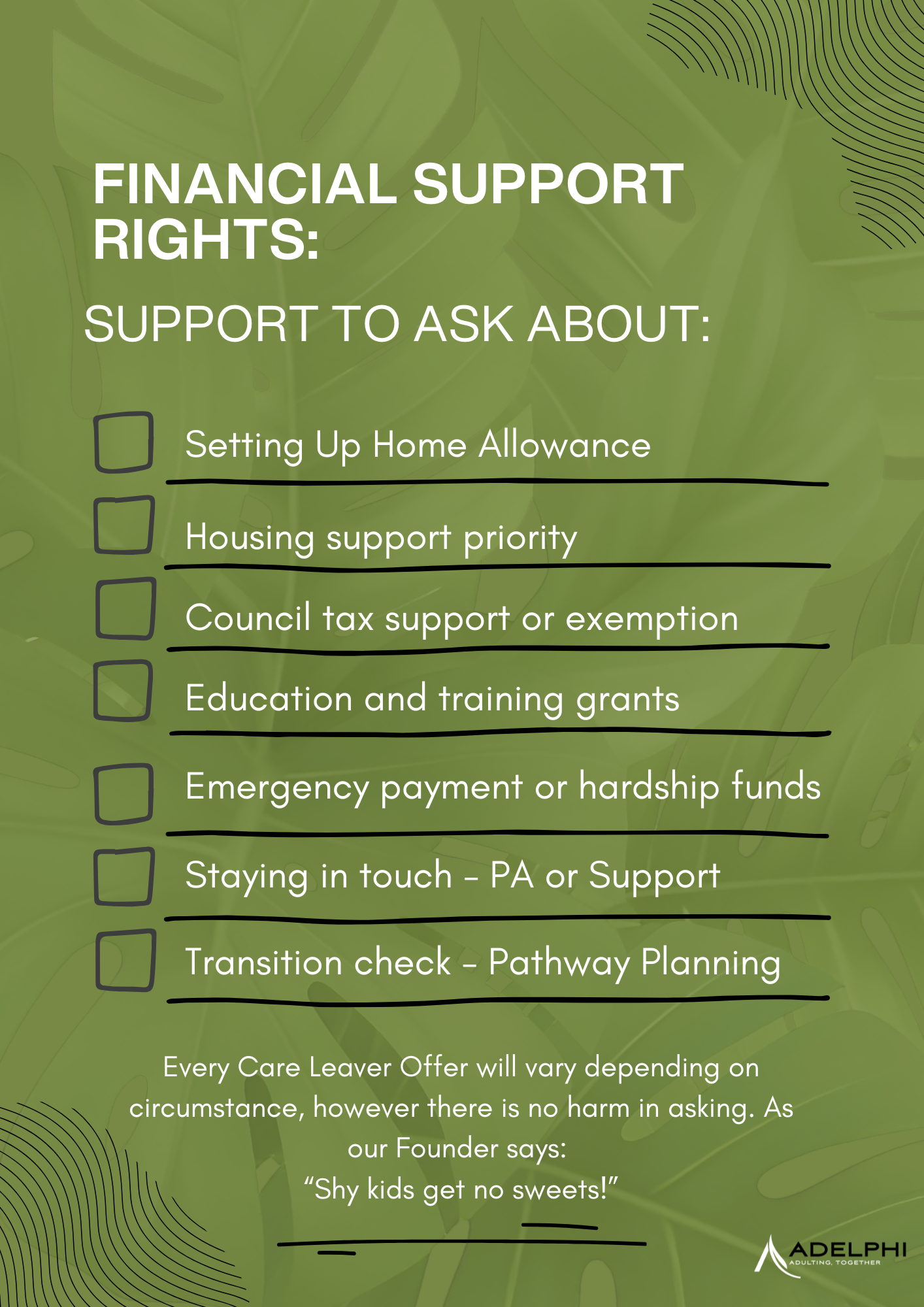
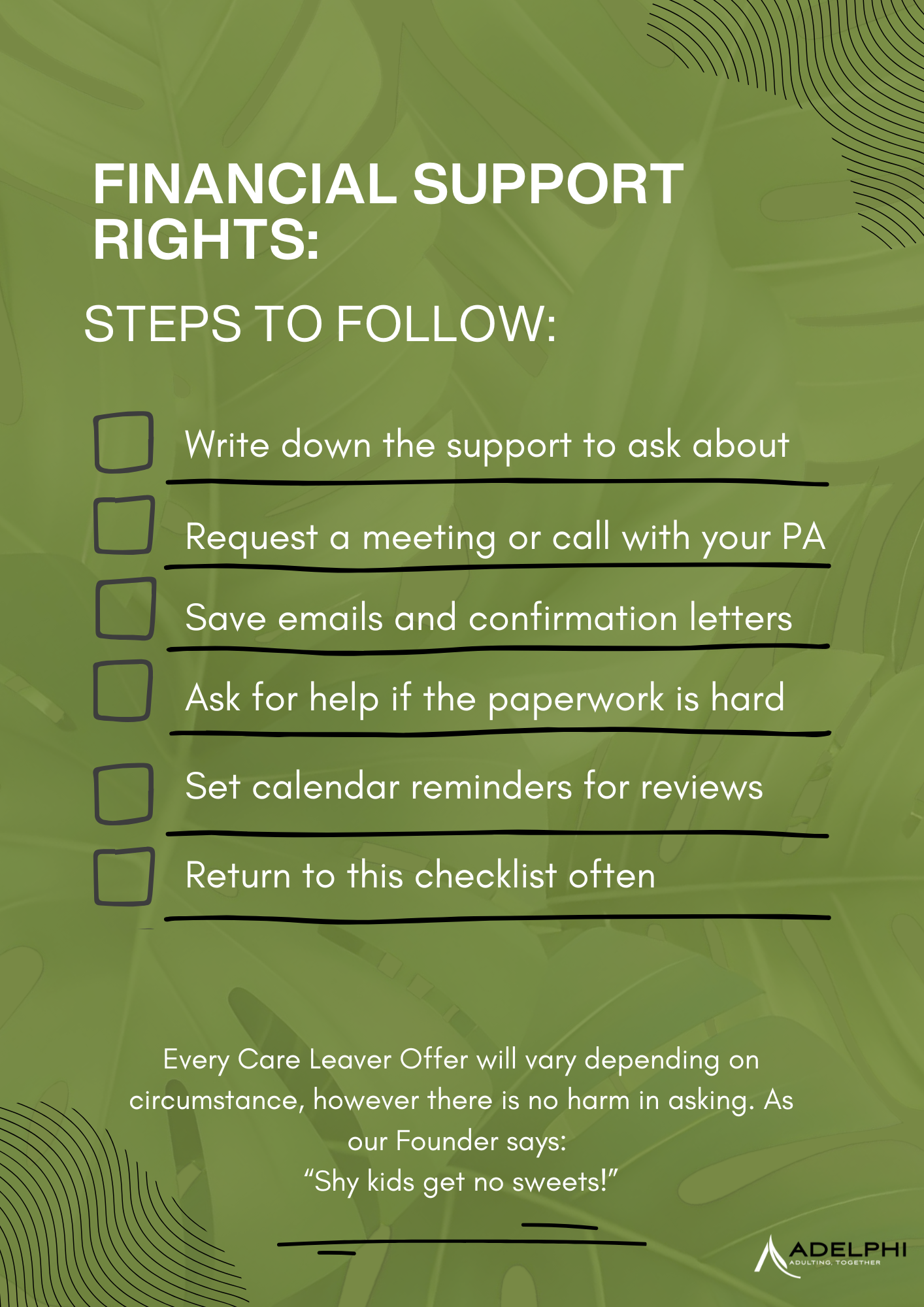
You can save the images to your device, or download as a PDF here
How to ask for your support
Approaching your local authority may feel awkward. Here’s how to do it simply:
“I’m a care leaver and I’d like to check what financial support I’m entitled to.”
“Could you send me the local offer for care leavers and the support available?”
“I’d like confirmation of what setting up home allowance I can get and how I apply.”
“Can you check if I qualify for a council tax exemption under the care leaver rules?”
You are not asking for charity.
You are stating your rights.
If you feel overwhelmed or unsupported
It is okay to feel stuck. Many young people feel this way when they realise they were never told about these supports.
Here’s what to do:
Ask your support worker or PA to help with calls or forms
Use citizen advice or charities if you need additional support
Keep reminders for important dates or deadlines
Make a note of who you spoke to, email, and what was said
Remember: needing help does not make you less independent.
Reflective moment
Growing up in care often meant you had to figure things out early, sometimes without support. If you ever feel like you don’t deserve help, remember:
Help was supposed to be given.
Support was supposed to exist.
And now you’re stepping into a space where the support is your right.
Asking for help doesn’t make you weak. It simply shows you are taking control.
Conclusion

Your rights as a care leaver include financial support.
You are not alone and you don’t need to find everything by yourself.
Use this checklist when you need it.
You are building your independence and your future with each small step.
You have every right to ask, and you have every right to be supported.