
Building Confidence in Learning
Confidence in learning is not something you are born with. It is something you build slowly, through small moments, supportive people, and experiences that help you realise you are more capable than you were ever led to believe.
If school or college felt stressful, chaotic, or inconsistent.
If you moved around a lot.
If nobody sat with you and explained things.
If you were labelled “behind”, “distracted”, or “not academic”.
It makes complete sense if learning may feel intimidating now.
This guide is here to help you gently build (or rebuild) trust in your ability to learn, at your pace, in your way.

Why confidence in learning typically drops (and why it is not your fault)
Confidence in learning is not just about intelligence or effort. It is deeply linked to how safe and supported you felt growing up.
It is shaped by:
whether adults believed in you
how your brain learns
how mistakes were treated
whether you felt seen or left behind
your experiences of school, authority, and pressure
For many care-experienced young people, there are extra layers on top of this. Disrupted schooling. Pressure to “be strong”. Feeling judged or compared. Being told to behave instead of being shown how to learn.
So if you doubt yourself now, that is not a personal failure. It is a response to what you lived through.
Confidence can be rebuilt.
You are not stuck.
remember: You have always been learning, even if it did not look like learning
One of the hardest parts of rebuilding confidence is believing you are capable in the first place.
But learning does not only happen in classrooms.
Remember, you have learned through work, life, relationships, and survival. Through problem-solving, adapting, caring for others, managing responsibilities, and figuring things out as you went.
These are all forms of learning.
The problem is not that you cannot learn; It is that nobody may have helped you recognise how much you already have.
Comparison is one of the fastest ways to lose confidence

It is easy to compare yourself to people who seem further ahead.
But other people may have had stable schooling, quiet homes, tutors, and consistent support. You had real life.
Comparing your Chapter One to someone else’s Chapter Ten will always hurt your confidence.
Your path is not meant to look like theirs.
Your pace is not wrong; Your starting point matters.
Confidence grows when learning feels manageable
Confidence does not come from pushing harder. It comes from making learning feel safe.
That often means breaking things down much smaller than you think you “should”.
For example:
watching a five-minute video
reading one short section
practising one example
writing a few bullet points
trying one free lesson
Your brain builds confidence through success, not pressure.
Learning works best when it suits your brain
There is no single “right” way to learn.
Some people learn best through watching. Others, through talking things through. Some need hands-on practice, repetition, diagrams, or short bursts rather than long sessions.
You are not bad at learning.
You just need methods that fit you.
For a more visual explanation, watch the video below for an explanation on different learning styles:
Try this: (re)building learning confidence gently
You do not need to do all of this. One small step is enough. Click on each option below for more information:
-
Think of one thing you can do now that you could not do a few years ago. It does not need to be academic.
This is proof your brain can learn.
-
Choose something that feels interesting, not impressive. Curiosity is safer than pressure.
-
This might be a short video, one page, or one small task.
Small steps help confidence grow.
-
Decide when you will stop, how long you will spend, and how you will rest afterwards.
Learning works better when your nervous system feels calm.
-
Progress might simply be understanding something a little more than before.
You do not need grades or proof for learning to count.
You can come back to this anytime. Confidence grows through noticing, not forcing.
Why learning can feel scary
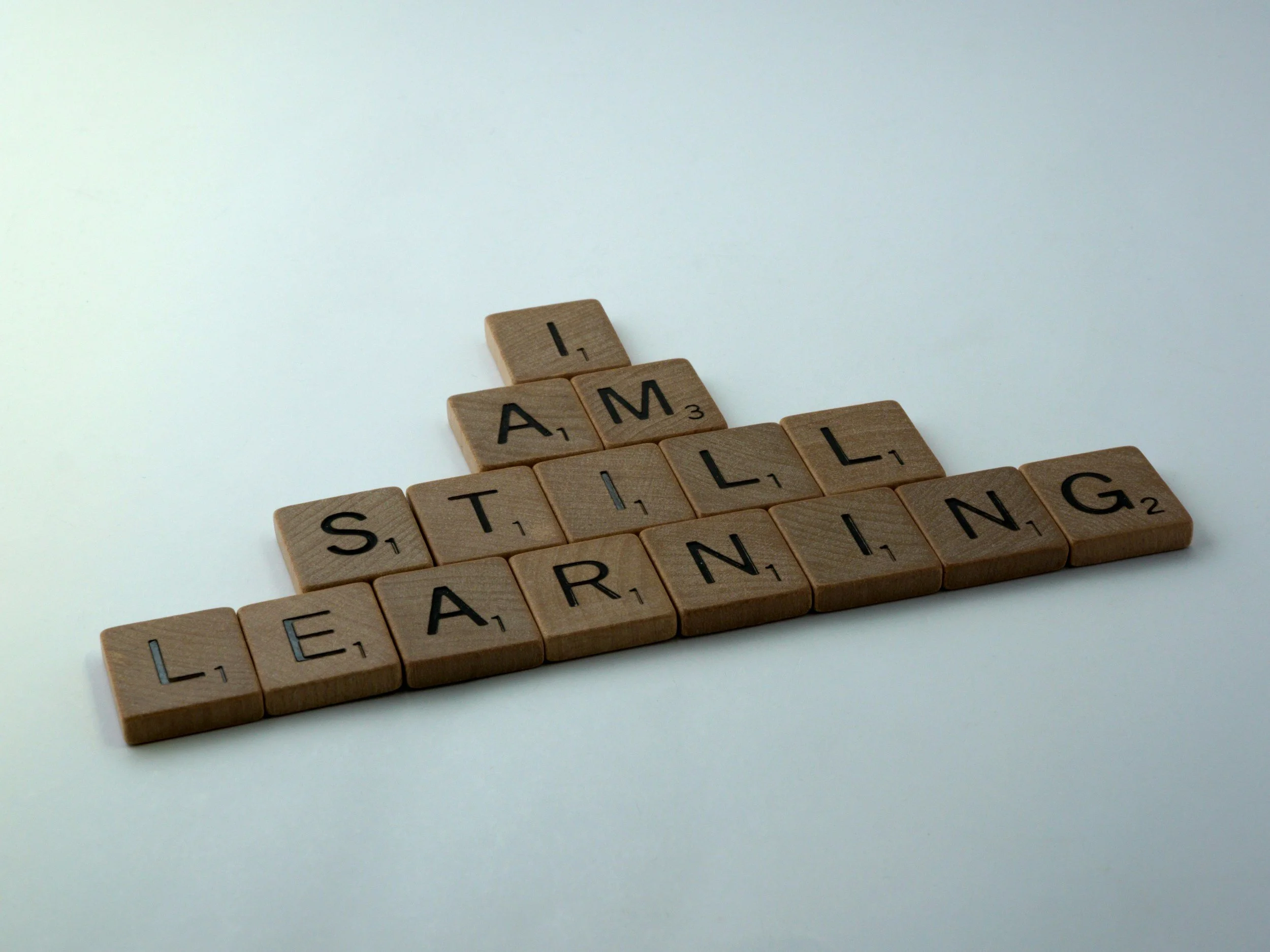
Beginning something new often brings up fear, not because you are incapable, but because your brain may be trying to protect you from uncertainty or past experiences that felt unsafe.
Fear around learning is common, especially if mistakes were judged or support was inconsistent before. Feeling anxious or hesitant does not mean you cannot learn. It often means you care, and your brain is being cautious.
Being a beginner is not a weakness
One of the hardest parts of learning is letting yourself be new at something.
Being a beginner means:
asking questions
needing things explained more than once
making mistakes
learning slowly
None of this makes you stupid. It makes you human.
For many people, being a beginner feels vulnerable. That does not mean you should avoid it. It means you deserve patience and kindness while you learn.
Tiny wins matter more than big breakthroughs
Confidence is built through small moments.
Finishing one task.
Understanding one idea.
Asking for help.
Trying again after a bad day.
These tiny wins quietly stack up. Over time, they change how you see yourself.
Hard days do not erase progress
Some days you will feel capable.
Other days your brain may feel foggy, tired, or overwhelmed.
Hard days do not undo what you have learned. They do not define your ability.
You are still growing, even on the days it does not feel visible.
Remember: you are allowed to ask for help

Asking for help is not a failure. It is a learning skill.
You might ask tutors, support staff, mentors, study skills teams, friends, or your PA or support worker.
You were never meant to do this alone.
Confidence grows faster with the right people around you
Learning feels safer when someone believes in you.
That might be someone who listens, explains things kindly, encourages you, or reminds you of your strengths when you forget them.
People matter. Choose the ones who help you grow.
Trying new things, gently
Confidence grows when you step slightly outside your comfort zone. Not miles. Just a little.
That might be a short free course, a workshop, a hobby, a learning video, or something you are simply curious about.
Each small step tells your brain, “I can learn new things.”
Reflective moment
If learning brings up fear, shame, or self-doubt, that’s okay. You may have learned to survive instead of thrive. You may have been unseen, unsupported, or misunderstood.
Your ability to learn was never the problem; Your environment was.
Now you get to rebuild learning in a way that feels safe, gentle, and empowering.
You are not behind.
You are starting from experience.
Closing thoughts

Building confidence in learning is not about becoming fearless or suddenly loving education. It is about feeling a little safer each time you try.
Confidence grows when learning stops feeling like a test and starts feeling like something you are allowed to approach on your own terms. It grows when you choose methods that suit your brain, take breaks when you need them, and remind yourself that struggling does not mean failing.
What matters is not how fast you move, but that learning no longer feels closed off to you. With time, patience, and the right support, it can become something that works with you rather than against you.
You are capable of learning, and you always have been.